Rope photography
Photographing the texture of jute
By Tomas Berg, Rope photographer Published 10 September 2026
Rope is a texture subject, and the camera treats the three common materials very differently. Jute has visible loose fibre and a matte surface that reads as warmth and roughness. Hemp is smoother and denser and photographs as something closer to a drawn line. Synthetic rope has a specular sheen that produces bright highlights along the twist, which reads as slick rather than tactile and is the single clearest giveaway of material in a photograph. New rope of any kind is hardest, because it is uniform, pale and slightly shiny, and uniformity is the enemy of texture.
This site writes about rope as an image, and it publishes no tying instructions: no steps, no named ties given as method, nothing to follow. Rope on a body carries real physical risk, and anyone who wants to learn it should learn in person, slowly, from experienced teachers.
A rope photograph is a texture photograph with a person in it. The material is doing more work in the frame than most photographers give it credit for, and the three common ones do not behave alike in front of a camera.
What the camera is actually recording
Fibre reads through three properties, and only one of them is under the photographer’s control at the moment of exposure.
The twist produces a regular pattern of small shadows along the length. It is the primary signal and it exists only when the light comes across the surface rather than at it, which is the whole argument of lighting rope for photography.
The surface finish decides how light leaves the rope. A matte surface scatters it and returns a soft even value. A shinier one throws back a narrow bright highlight, and the eye reads bright narrow highlights as hardness.
And the loose fibre standing proud of the surface catches light independently of the rope beneath it. Under a back light this produces a fine bright fringe along the edge of the line, which is one of the most attractive things in the genre and which most photographers discover by accident.
Jute, hemp, synthetic
Jute is the material most of this work uses and the one the visual conventions were built around. It is matte, it is a warm yellow brown, and it carries visible loose fibre. Under raking light it gives up its twist readily and under a back light it produces the halo described above. In a photograph it reads as warm, rough and tactile, which is to say it reads as something you can imagine touching.
Hemp is denser and smoother with less loose fibre. It photographs as a cleaner, more graphic line with less internal detail. That is not a deficiency: a minimal composition with one line across a pale ground is often better served by hemp, because the line stays a line rather than fraying into texture.
Synthetic rope is the odd one out. Its surface is specular, so instead of scattering light it reflects it, and a raking source produces a bright continuous highlight running along the twist rather than a series of shadows. In the room this can look impressive. In a still photograph it reads as plastic, and it is the fastest way for a viewer to identify the material without being told. Synthetic also takes saturated dye far better than natural fibre, which is why almost all strongly coloured rope in photographs is synthetic, and why colour and sheen tend to arrive together.
New rope is a problem
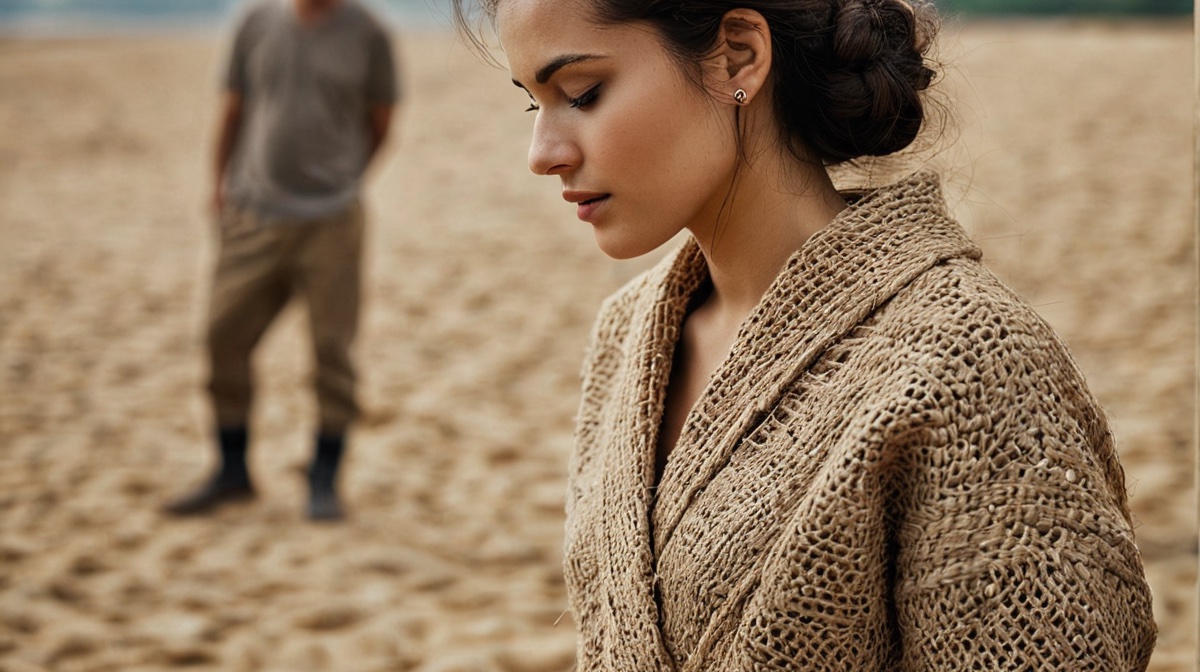
The most common complaint about rope not looking right in pictures is really a complaint about new rope.
Fresh fibre is uniform. Even colour along its whole length, even surface, no variation, and often a slight residual shine. Uniformity means the camera has nothing to describe: every centimetre returns the same value as the last, and a surface returning a constant value renders as a flat shape.
Rope that has been handled is uneven. Tone varies along the length, some sections are darker than others, fibre has been raised in places, and the whole thing has lost its factory sheen. That unevenness is what the eye reads as material. It is the same reason a worn leather chair photographs better than a new one.
There is no camera setting for this and nothing to do in an edit that convincingly fakes it. The only useful responses are to shoot rope that has been used, or to light new rope harder from the side so that the twist supplies the variation the surface will not.
The colour collision
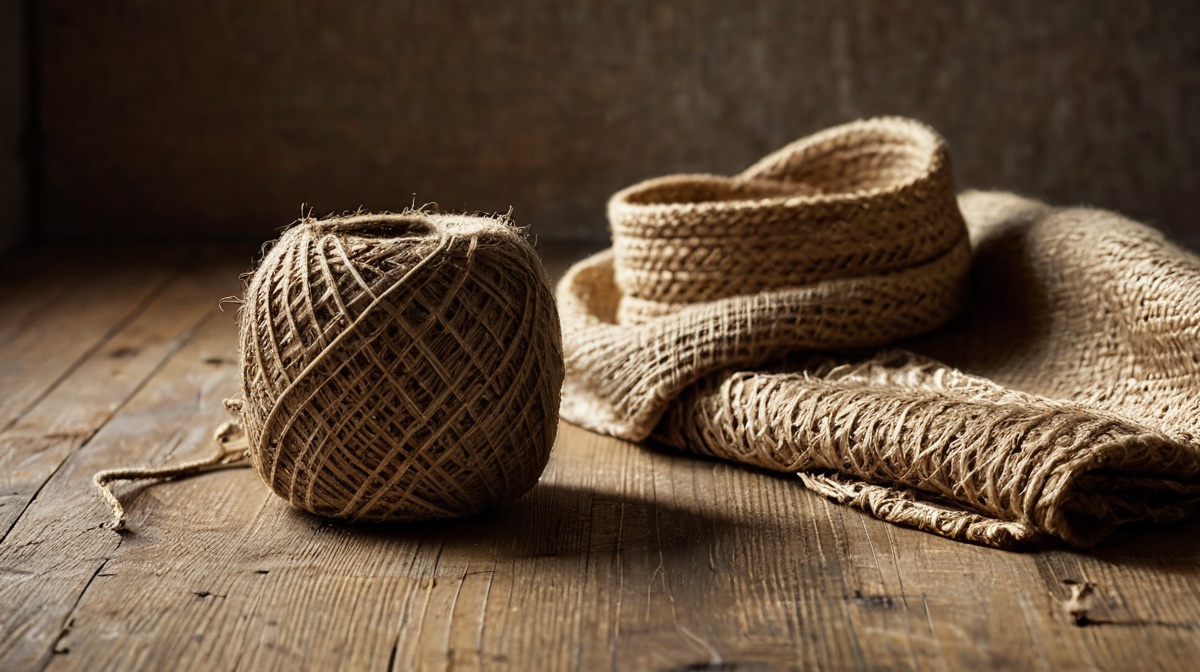
Fresh jute sits in a warm yellow brown that is uncomfortably close to the hue of pale skin. Under a warm light source the two converge, and the picture ends up with rope and body occupying nearly the same colour and nearly the same brightness, which removes both of the cues a viewer uses to separate objects.
Three fixes, in order of reliability. Cool the light, or cool the grade afterwards, which pushes the fibre towards grey brown while skin stays pink. Introduce a third material at a clearly different tone, so the frame is not simply two warm surfaces against each other, which is a wardrobe decision as much as a lighting one. Or remove colour from the problem entirely, which is one of the practical arguments in monochrome by default.
Darker skin changes the calculation and mostly for the better: the tonal distance between warm brown fibre and deeper skin tones is larger, and the collision that plagues pale subjects does not occur. What does need attention there is that a light metered for jute will underexpose the person, and the exposure should be set for skin as it always should.
Detail, and how much is too much
Rope rewards close work, and it is possible to overdo it.
At very close range with hard light, fibre becomes a landscape: individual strands, the gaps between them, the small irregularities of the twist. It is genuinely beautiful and it stops being a photograph of rope somewhere around the point where the subject is no longer identifiable.
The useful range sits where the twist is legible as a repeating pattern but the whole line still reads as an object crossing a body. That is a distance rather than a magnification, and it usually means the frame contains at least one other thing: an edge of cloth, a shoulder, the corner of a mat. Texture needs something to be adjacent to before it means anything.
The extreme version of this problem, texture with the body removed altogether, is what the plate rope at rest was made to test. A coil of jute on folded cloth under one raking source turns out to hold a frame perfectly well on its own, which says something about how much of this genre’s appeal is material rather than human.
Questions readers ask
Which rope photographs best?
Jute that has been used, for texture reasons alone. Its matte surface holds the small shadows that make a twist legible, and the loose fibres around it catch a back light and produce a fine halo that reads as tactile. Hemp is denser and cleaner and gives a more graphic line, which suits minimal compositions. Synthetic rope reflects, and specular highlights along a twist tend to read as plastic in a still image regardless of how it looks in the room.
Why does new rope look worse in photographs?
Because it is uniform. New fibre is even in colour, even in surface and slightly reflective, and evenness gives the camera nothing to describe. Rope that has been handled has variation in tone along its length, raised fibre that catches light, and small irregularities that give the eye somewhere to land. The difference is comparable to photographing new denim against worn denim.
How do you keep jute from matching skin tone?
Cool the light slightly, or cool the image afterwards, so the warm yellow brown of jute separates from the warm pink of skin. Add a third material at a different tone so the frame is not just two warm surfaces. Or work in black and white, where the two differ in brightness even when they barely differ in hue. All three are easier than trying to fix the collision in post once it is recorded.
A shoot is three people and a lot of talking
Technique is the cheap part of an image like this. The collaborators are the expensive part, and they are found in rooms, not in tutorials.
Find the people