Staging
Floor or air: what suspension does to a frame
By Perrine Vaux, Performance writer Published 6 September 2026
Taking a figure off the floor removes the horizontal from the picture, and the horizontal was doing a great deal of work: it gave scale, it gave the eye a place to rest, and it told the viewer where they were standing. A suspended figure floats in an undefined volume, which is why suspension photographs frequently disappoint despite being far more impressive in the room. Floor arrangements give the photographer a ground plane, a shadow, contact points and a low camera position, all of which make a picture easier to build and harder to make spectacular.
This site writes about rope as an image, and it publishes no tying instructions: no steps, no named ties given as method, nothing to follow. Rope on a body carries real physical risk, and anyone who wants to learn it should learn in person, slowly, from experienced teachers.
The two arrangements are usually discussed as a progression, with floor work as the beginner’s version and suspension as the advanced one. As pictures they are not on the same scale at all. They are separate compositional problems with different failure modes, and the harder one to photograph well is the impressive one.
The horizontal was doing more than you thought
A figure on the floor comes with a ground line, and the ground line is a free gift to the composition. It gives the frame a horizontal to place things against, so the eye has a reference for every angle in the picture. It supplies scale, because a viewer knows roughly how big a floor is. And it anchors the figure with a contact shadow, which is the cue that tells us an object has weight.
Take the figure off the floor and all three vanish at once. The frame now contains a body at an angle in an undefined volume, and the viewer has nothing to measure it against. The picture can no longer say how high, how big or how heavy, and those were the things the situation was about.
This is why suspension frequently photographs as less than it was. The room supplied the sense of load through sound, movement and the visible effort of everyone in it. The photograph has to construct that from geometry alone, and geometry alone will not do it.
What replaces the ground
If the horizontal is gone, something has to take over, and there are a few options that work.
A visible support at the top of the frame restores the reference. A beam, a ring, a hard point at the upper edge, even partially cropped, tells the viewer this is hanging and gives the composition a fixed element. Many photographers crop it out in the interest of purity and then wonder why the picture has no tension in it.
Any vertical at all will do some of the work: a doorway, a column, the edge of a wall. It gives the diagonal of the body something to be at an angle to, and a diagonal is only dramatic in relation to something straight.
Light that describes a volume rather than a plane also helps. A single side source with a real falloff tells the eye there is depth in the room, whereas an evenly lit backdrop leaves the figure floating on a surface. The setup logic here is the same as everywhere else and it is in lighting rope for photography.
Or accept the ambiguity and make it the subject. A figure in an unreadable dark volume with one line leaving the top of the frame is a real picture, and it is a better one than a badly lit attempt at documentation. It just has to be the intention rather than the consolation prize.
The tilt problem
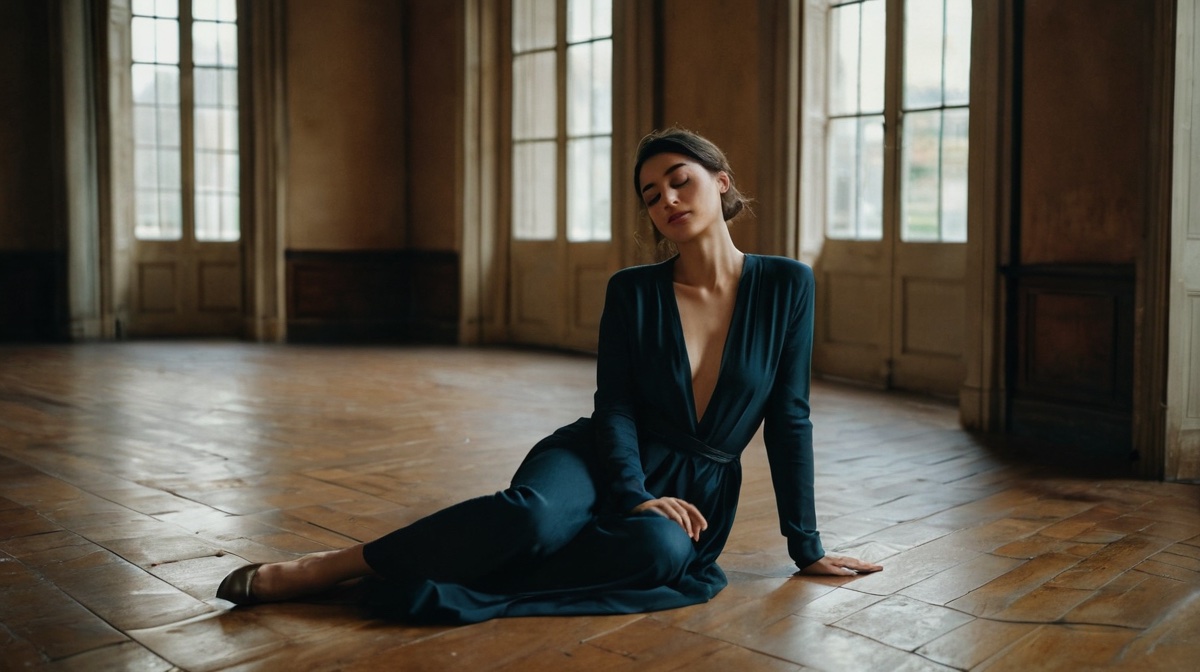
A suspended body sits at an angle, and angles interact with the frame edges in ways that catch people out.
An angle close to but not equal to the frame’s diagonal reads as a mistake. The eye compares the two and finds them nearly aligned, and near alignment looks like carelessness rather than choice. Either commit to the diagonal or move well off it.
Something close to horizontal in a horizontal frame will fill the picture edge to edge and leave two thin bands of nothing above and below, which is almost always weaker than turning the camera and letting the figure sit across a taller frame with real space around it.
And an inverted figure inverts the whole reading of the picture, because the face is now in the lower third where the eye arrives last. If the picture is meant to be about the person, an inversion is working against it and needs a compensating decision, usually a light that puts the face at the brightest point in the frame.
What the floor gives back
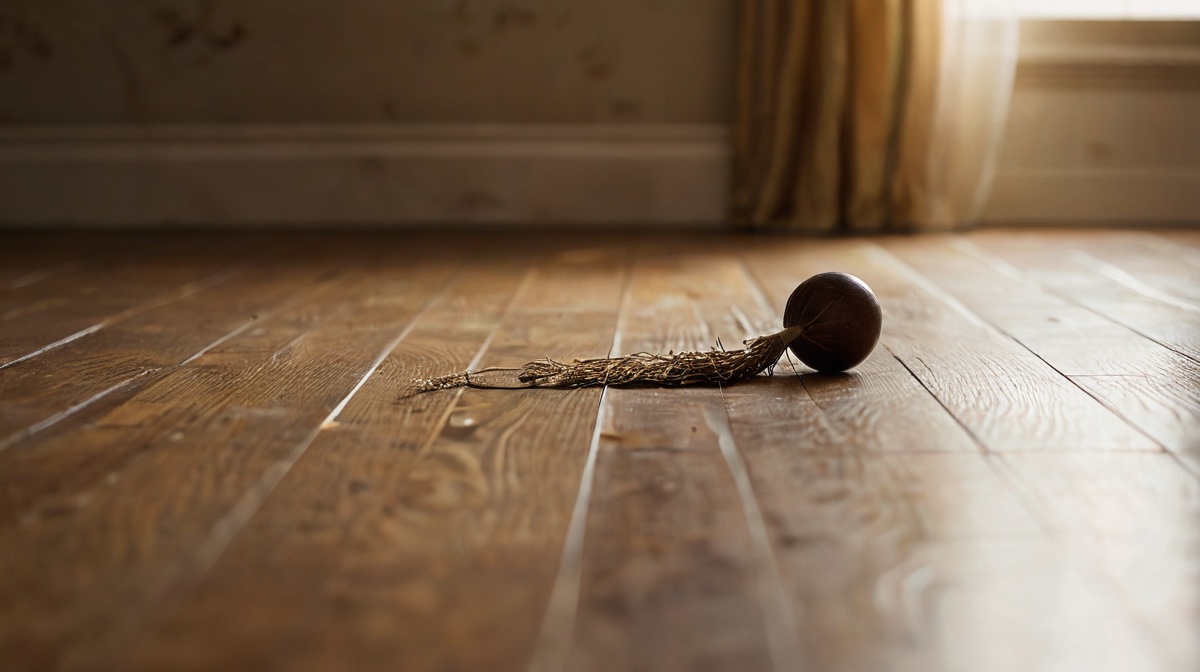
Floor arrangements are easier to photograph well, and that is not a criticism of them.
The camera can go low. Floor level is the least used position in rope photography and it produces the most unfamiliar images, because it is not where anyone in the room was standing. It also changes the agency reading of the picture, as whose picture is it sets out, since a camera below the eye line grants stature rather than surveying.
There is contact. Where a body meets a floor there is compression, a change in the shape of the flesh, a shadow. Contact is legible and it makes a figure look present rather than pasted in.
There is less volume to light. A subject occupying a metre of space can be described with one source. A suspended figure occupying two and a half metres vertically will fall off badly from top to bottom under the same setup, and evening that out usually means a second source, which brings the flattening problem back.
And the working distance is manageable. A compact subject can be framed with a longer lens in an ordinary room, which is the practical constraint that decides what focal length a room will allow.
Choosing before the session, not during
The point of separating these is that they need different rooms and different preparation, so the choice cannot be made halfway through.
Suspension needs height, a background that extends upwards, and light that reaches the top of the volume. If the ceiling is low the frame will contain a ceiling, and a ceiling in a suspension photograph destroys the implication of height more efficiently than anything else. Floor work needs a clean ground plane, which means a floor worth photographing and space to get the camera low without a skirting board in the shot.
Both come down to the same preparation, which is deciding what the frame contains before anyone is in position. That is the subject of the ground behind the figure, and it is where more pictures are won and lost than in any decision made once the session is running. The values being served by any of it are the same in both cases: a legible line, an asymmetry, and a frame that is mostly empty on purpose.
Questions readers ask
Why do suspension photographs often look worse than they felt in the room?
Because most of what is impressive about a suspension is not visual. It is the awareness of load, duration and risk, and none of those survive a still frame. What the photograph records is a figure at an unusual angle in an undefined space, with no ground line to give it scale and no shadow to anchor it. The room supplies the drama, the picture has to build it, and building it takes a considered background and a light that describes the volume.
What does a floor arrangement give a photographer?
A horizontal to compose against, a contact shadow that anchors the figure, and permission to put the camera low, which is the most underused position in this genre. It also compresses the subject into a smaller volume, so a modest room provides enough working distance for a longer lens. Floor work is the easier picture to make well and the harder one to make startling.
Is a wide shot or a detail better for suspension?
Detail is usually the safer picture and the wide shot is the one people attempt. A wide frame has to justify all the empty space around the figure, and unless the background is doing something, that space is just room. A tighter frame that shows the angle of a body and one line disappearing out of the top of the picture keeps the implication of height without asking the emptiness to carry the composition.
A shoot is three people and a lot of talking
Technique is the cheap part of an image like this. The collaborators are the expensive part, and they are found in rooms, not in tutorials.
Find the people