Reading a tie
Whose picture is it
By Yuki Almeida, Tradition and aesthetics Published 4 September 2026
A rope photograph grants or withholds agency through a small number of formal choices, and they are visible in the frame. Whether the bound figure looks at anything. Whether their hands are doing something or merely arranged. Whether the person who tied them is present in the picture or hidden outside it. Whether the camera is above the subject, level with them or below. None of these is a statement about what actually happened in the room, which is the standing limitation of reading pictures this way, but together they decide what the image proposes.
This site writes about rope as an image, and it publishes no tying instructions: no steps, no named ties given as method, nothing to follow. Rope on a body carries real physical risk, and anyone who wants to learn it should learn in person, slowly, from experienced teachers.
A rope photograph has at least two people in it and usually shows one. That asymmetry is where the reading has to start, because the missing person is present in the picture whether or not they are visible: something is holding the weight, and someone put it there.
The gaze is a decision, not an accident
Where the bound figure is looking is the fastest signal in the frame, and there are four available positions.
Eyes closed reads as interiority. The picture becomes about a state rather than a relationship, and the viewer is watching something private. It is the safest option and the most common, and it is worth noticing how often it is used as a way of avoiding the question rather than answering it.
Eyes turned away, to a specific point outside the frame, reads as attention directed somewhere. This grants agency cheaply and effectively, because looking at something is an action. The viewer becomes aware of a world the picture has not shown them.
Eyes on the person tying, when that person is in the frame, is the strongest agency signal available, because it establishes a relationship with a second party in the picture rather than with the audience.
Eyes into the lens is the complicated one. It can read as confrontation, which is agency at maximum, or as availability, which is the opposite, and the difference is decided almost entirely by the set of the mouth and the angle of the chin. It is the highest variance choice in the genre and the one most often made by accident.
Hands are the second tell
Hands are usually the only part of a bound body still able to do something, and photographers who understand this build the picture around them.
A hand that is gripping, pressing against the floor, curled around a length of rope or holding another hand is performing an action. A hand hanging open and inert is being arranged. Both can be beautiful. Only one of them proposes that the person in the picture is doing anything.
The most sophisticated version is a hand doing something small and unnecessary, like a finger hooked around a line it does not need to hold. It reads as a person occupying a situation rather than submitting to one, and it is a detail a viewer registers without noticing that they have.
Is the other person in the frame
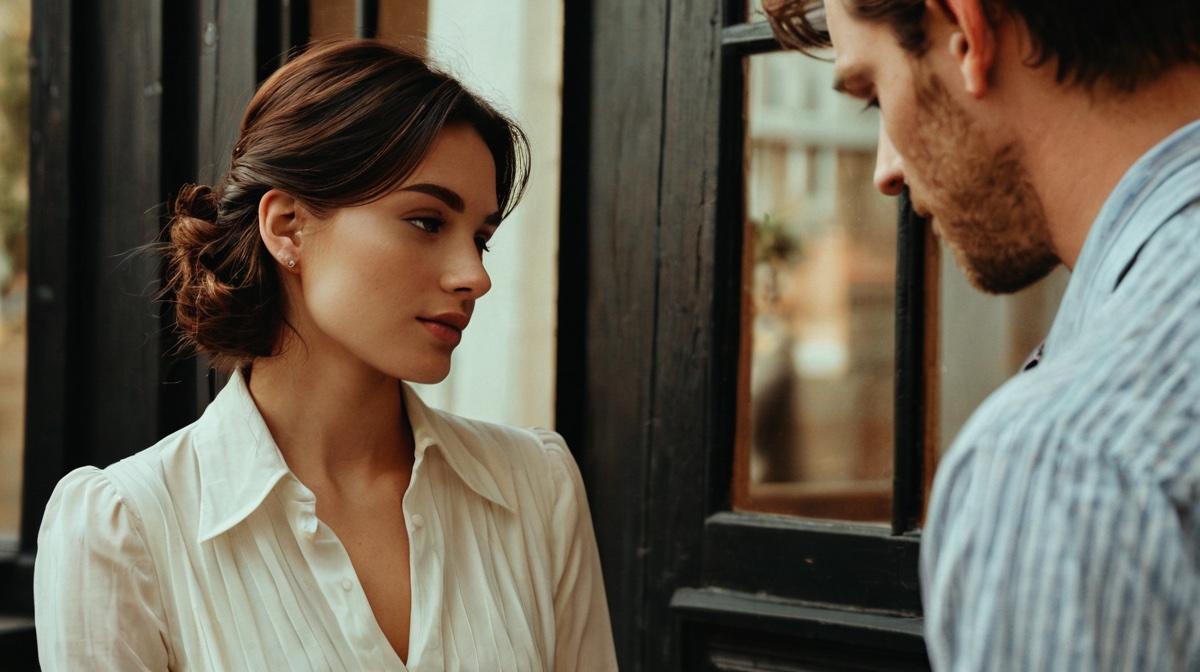
Rope photography overwhelmingly excludes the rigger, and the exclusion is so standard that it has stopped looking like a choice. It has consequences.
With the second person cropped out, the force in the picture has no source. It becomes ambient, as though the rope were a condition rather than something a person did in the last few minutes. That is a specific proposition and it happens to be the one that makes the bound figure most object-like, because an object is exactly what has things happen to it without an agent.
Bring the second person into the frame and the picture becomes a relationship. Now there are two people, both of whom made choices, and the viewer’s position changes from surveying a scene to witnessing an exchange. Even a hand at the edge of the frame does most of this work.
The reason this is rare is partly aesthetic and partly practical: a second figure is compositionally difficult and most riggers do not want to be photographed. But the convention should be recognised as a convention, since three authors, one image argues the picture was made by three people, and the standard frame shows one.
Camera height is doing more than you think
The camera’s position relative to the subject’s eye line is a strong and underexamined signal.
Above, looking down, places the viewer in a position of survey. The figure occupies less of their own frame, the floor becomes prominent, and the picture takes on the character of an inspection. Shot from standing height at a seated or kneeling subject, which is the default posture of an unthinking photographer, this is what you get.
Level with the subject puts the viewer in the room on equal terms. It is the least dramatic option and generally the most respectful, and it makes the picture harder to make interesting, which is probably why it is less common.
Below the eye line grants stature. It is rarely used in this genre and it produces genuinely strange results when it is, because it contradicts the expectation the subject matter sets up. That contradiction is available to any photographer who wants it and almost nobody takes it.
The limits of reading
Everything above describes what a picture proposes. None of it describes what happened.
A photograph is one selected fraction of a second. The selection was made afterwards, by someone with an intention, from a large number of alternatives. A session in which everyone was comfortable and in agreement can yield a frame that looks bleak, and a session that was rushed and unpleasant can yield a serene one. There is no reliable inference from the image to the room, and readings that claim otherwise are performing certainty they have not earned.
What the frame does support is a narrower claim: whether the people making this picture were interested in representing agency at all. That is visible, because the choices listed here are choices, and a body of work that consistently makes them one way is telling you something about its makers. The generation working now is largely defined by having started making them the other way, and by saying so in the caption.
Why it is worth reading for
Not to award marks. The point of noticing this layer is that it is the layer where the genre’s reputation is actually decided, and it is almost never discussed, because discussion of rope photography tends to stop at composition and light.
Two pictures can be identical in every technical respect and opposite in what they propose about the person in them, and the difference is a gaze, a hand and a camera height. Those are cheap adjustments. Knowing they exist is the difference between making a picture about somebody and making one at them, and it costs nothing to check before the shutter. Everything else in how to look at a rope photograph is easier to fix afterwards than this is.
Questions readers ask
How can a photograph give someone agency?
By showing them doing something rather than having something done to them. A gaze that goes somewhere specific, hands that hold or press rather than hang, weight taken deliberately rather than sagging, a posture that reads as chosen. These are formal features and a viewer registers them in well under a second. A picture built from them proposes a participant. A picture built from the opposite proposes a surface.
Does a downward camera angle make an image objectifying?
It tilts it that way, and the effect is consistent enough to be worth knowing about. A camera above the subject puts the viewer in a position of survey and makes the figure smaller in their own frame. Level puts the viewer in the room as an equal. Below grants stature. None of this is a rule, and a high angle can be used deliberately against its own grain, but a photographer who has never thought about it will usually shoot from standing height and get the survey position by default.
Can you tell from a picture whether the person consented?
No, and any reading that claims to is overreaching. A photograph shows a fraction of a second chosen from hundreds by someone with an intention, and both a genuinely collaborative session and a bad one can produce a serene frame. What a picture can show is whether the people making it were interested in representing agency, which is a different question and a fair one to ask of the image alone.
History is a record of people who met
Every tradition on this page was carried by practitioners who found each other, argued, and worked. Reading about it is the smaller half.
Find the people