Lineage
The magazines that made a scene
By Yuki Almeida, Tradition and aesthetics Published 12 August 2026
The postwar Japanese magazines are where rope stopped being a private subject and became a public visual style with recognisable conventions. Kitan Club, a monthly published in Osaka from 1947 to 1975, carried sadomasochistic articles, drawings and photographs from 1952 onward, and the word kinbaku appears in its contents page in August of that year. Three practical pressures shaped what those pictures looked like: pulp paper that could not hold fine tone, obscenity law that made certain framings impossible, and a readership that supplied a large share of the material itself.
This site writes about rope as an image, and it publishes no tying instructions: no steps, no named ties given as method, nothing to follow. Rope on a body carries real physical risk, and anyone who wants to learn it should learn in person, slowly, from experienced teachers.
Seiu Ito made pictures. The magazines made a scene. The distinction matters, because a scene is what turns a set of private preferences into a style with rules that strangers can recognise and argue about.
Thirty years of monthly deadlines
Kitan Club was a monthly, published out of Osaka, and it ran from 1947 to 1975. It did not start as a rope magazine. The early issues are an ordinary postwar men’s title: nightlife pieces, fiction, photographs of women. From 1952 the emphasis changes, and articles, drawings and photographs on sadomasochistic themes become a fixture. The word kinbaku turns up in the contents of the August 1952 issue.
The editor usually credited with that reorientation is Minomura Kou, who also worked as Kita Reiko. The magazine’s pages carried Chimuo Nureki, the novelist Oniroku Dan, Takashi Tsujimura, Tadao Chigusa, Shoji Oki and the fetish artist Namio Harukawa, whose early work appeared there. Work by the American artist John Willie also ran, which is a useful corrective to the idea that this material moved in one direction only.
Thirty years of monthly deadlines is the part that gets underweighted. A magazine has to fill pages on a schedule, and filling pages on a schedule is how a house style forms. Somebody decides what a good picture looks like, that decision gets repeated twelve times a year, and after a decade it stops being a decision and becomes what the thing is.
The readers were the contributors
The postwar titles ran on submissions. Readers wrote in, sent pictures, argued in the letters pages and adopted names for the purpose. Takashi Tsujimura has said that Takehiko Midori was the pen name he used when he first wrote to Kitan Club, and only later did he publish under his own.
This is not a footnote about publishing logistics. It changes the pictures. A magazine assembled from reader material has no house photographer and no studio, so it is full of domestic rooms, ordinary lamps and whatever fabric was to hand. It also means the standard for what counted as a publishable image was set collectively, by people looking at last month’s issue and trying to make something that would sit next to it. That is a feedback loop, and feedback loops converge fast.
Anonymity was structural rather than incidental. A pen name protected a contributor from an employer and from the police, and it is one reason the archive is so hard to read responsibly now. Looking at archive photographs takes up what follows from that.
Bad paper is an aesthetic
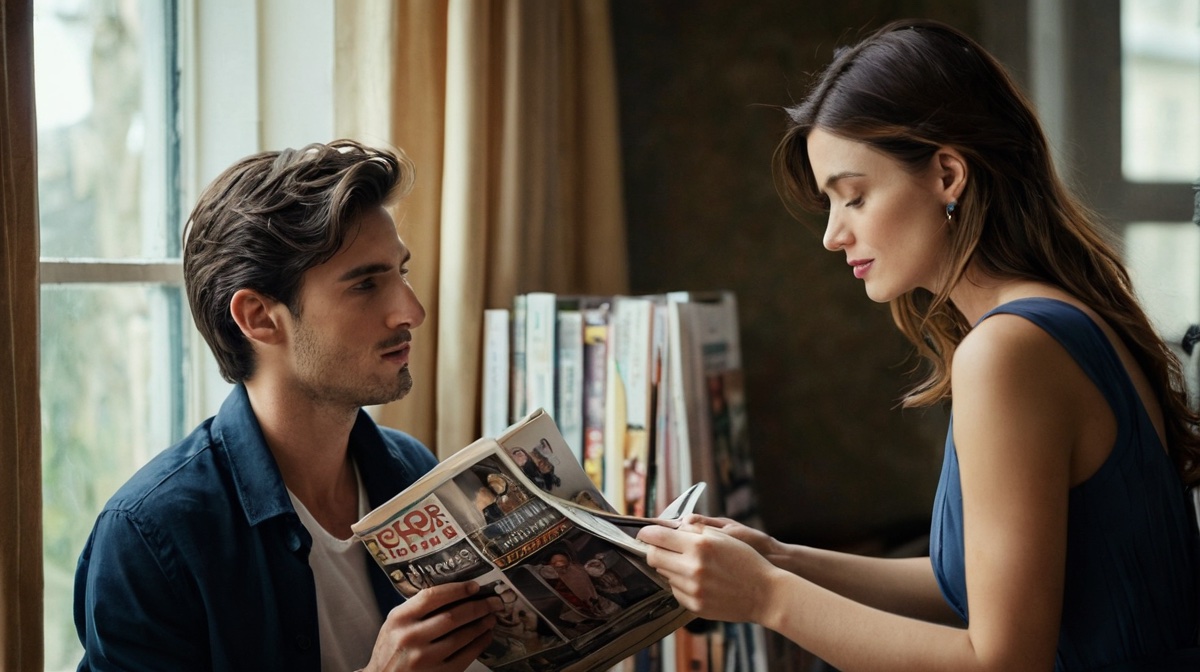
Postwar pulp magazines were printed cheaply on poor stock with coarse halftone screens. A photograph reproduced under those conditions loses its mid tones first. Delicate gradation turns to mud, fine detail fills in, and anything that depended on a subtle difference in brightness disappears between the plate and the page.
What survives is contrast and outline. A dark line against a pale ground survives. A silhouette survives. A single taut rope crossing a lit shoulder survives. An intricate arrangement photographed evenly does not: it arrives as a grey patch with something going on inside it.
Look at the pictures the period is remembered for and they share those properties, which is at least partly because the ones that did not share them were unreadable and stopped being made. Constraint acted as an editor. The preference for a legible line and a mostly empty frame that later writing treats as an aesthetic value was also, for thirty years, a printing requirement.
The law was in the frame
Article 175 of the Japanese penal code criminalises the distribution of obscene material without defining obscenity, and the practical result has been a long negotiation between publishers, police and the courts. In visual media the settled interpretation covered exposed genitals and pubic hair, and the industry’s own answer was concealment: blurring, fogging, mosaics, and framing that kept the problem out of shot.
Concealment is a compositional instruction. If a region of the body cannot be shown, the picture has to be built so that something else carries it, and the available substitutes are cloth, shadow, a turned hip, a cropped edge, an arm. Decades of that produce a genre unusually good at implication and unusually reliant on drapery, and it is a plausible reading that some of the tradition’s celebrated restraint began as compliance.
The pressure was not theoretical. Uramado, one of the earliest titles, had its offices raided in September 1962, material was confiscated and Nureki was arrested. He had become the magazine’s editor in chief that same year. The last issue came out in January 1965. The crackdown is usually placed in the context of a broader clean-up around the 1964 Tokyo Olympics, which is to say the pictures were caught up in a city preparing to be looked at.
The glossy turn
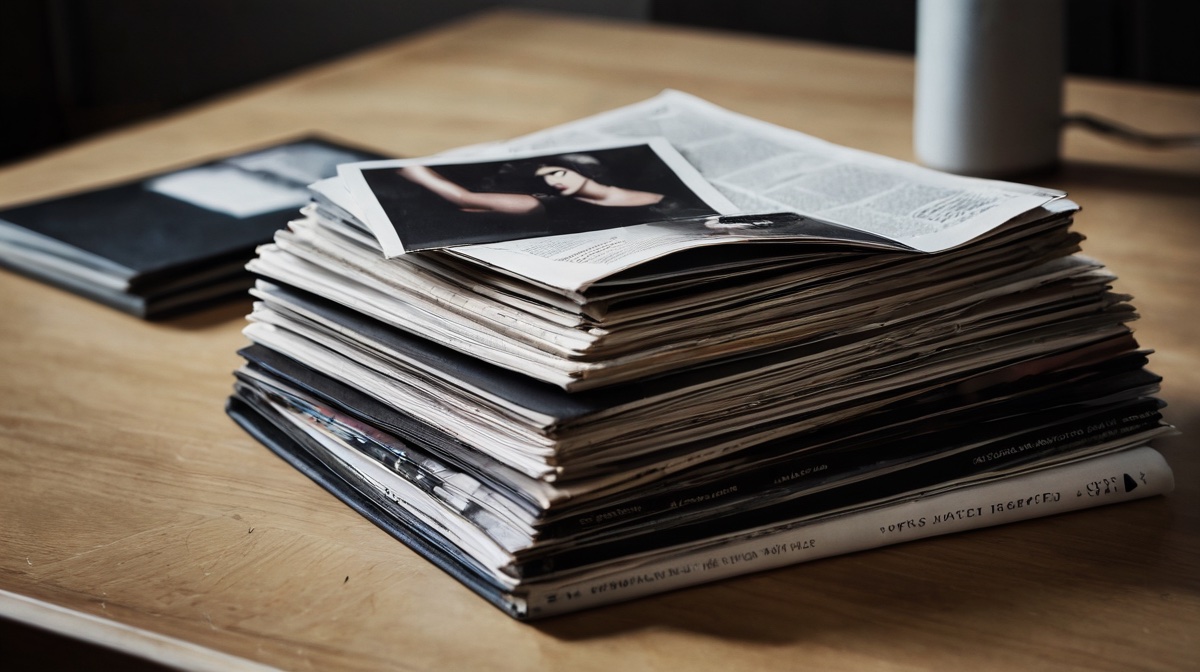
The second publishing wave arrived in the 1970s, with SM Fan and SM King among the titles, and it culminated in S&M Sniper, launched by Million Publishing in September 1979. Sniper is the moment the material acquires production values. It borrowed the visual language of fashion magazines and made room for contemporary art and subculture writing alongside the photography.
Better paper changed what a picture could be. Fine tone now reproduced, so photographers could work with gradation instead of contrast, and the flat graphic image of the pulp years gave way to something with depth in it. Art direction arrived at the same time: a shoot could be conceived as a spread rather than a single plate, with a location, a wardrobe and a sequence.
Not everyone thought this was progress, and there is a real argument on the other side. The pulp pictures were made by people photographing in their own rooms with one lamp, and they carry a directness that a styled editorial does not. The glossy image is better made and easier to look past.
What was left behind
By the time the magazines wound down, three things existed that had not existed in 1947. A shared repertoire of shapes that a reader could recognise across photographers. A set of names that meant something to strangers, which is the precondition for anyone being called a practitioner rather than a person with an interest. And an audience that had learned, month by month, how this kind of picture is supposed to be read.
All three were exportable, and within a couple of decades they were exported. How kinbaku reached the west follows what happened to them in transit, and from hojojutsu to kinbaku covers the older material the magazines were selectively drawing on while they did it.
Questions readers ask
What was Kitan Club?
A Japanese monthly published in Osaka from 1947 to 1975. It began as a general adult magazine and reoriented around sadomasochistic material from 1952, publishing articles, drawings and photographs including Japanese rope bondage. The editor Minomura Kou, who also worked under the name Kita Reiko, is credited with steering that shift. It is usually named as the most important single title in the popularisation of kinbaku during the 1950s.
Which other magazines mattered?
Uramado is generally listed alongside Kitan Club and Yomikiri Romance among the earliest titles. Its offices were raided by police in September 1962, material was confiscated, Chimuo Nureki was arrested, and the last issue appeared in January 1965. A second publishing wave arrived in the 1970s with titles including SM Fan and SM King, and S&M Sniper launched from Million Publishing in September 1979 with a considerably glossier presentation.
Why does the magazine period matter to how rope images look now?
Because it is where the conventions were set. Thirty years of monthly publication under fixed constraints produced a house style: high contrast, a legible silhouette, a face that is turned or lowered, and a composition that survives being printed badly. Photographers working today inherit those habits whether or not they know where they came from, which is worth knowing when you are deciding which of them to keep.
History is a record of people who met
Every tradition on this page was carried by practitioners who found each other, argued, and worked. Reading about it is the smaller half.
Find the people