Lineage
From hojojutsu to kinbaku
By Yuki Almeida, Tradition and aesthetics Published 30 July 2026
Modern kinbaku borrows vocabulary and some of its shapes from hojojutsu, the Edo-period practice of restraining a person with cord, but it does not descend from it in an unbroken line. The martial material documented a policing skill and was never erotic. What actually carried the bound figure forward was theatre and the print trade, then the photography and painting of Seiu Ito, then the postwar magazines. The tidy lineage story was put together backwards, by people with a reason to want the practice to have a pedigree.
This site writes about rope as an image, and it publishes no tying instructions: no steps, no named ties given as method, nothing to follow. Rope on a body carries real physical risk, and anyone who wants to learn it should learn in person, slowly, from experienced teachers.
Two histories of kinbaku are in circulation. One is short, tidy and repeated everywhere: samurai tied prisoners, the skill became an art, the art became erotic. The other is longer, has a hole in the middle, and is the one the evidence supports.
What hojojutsu actually was
Hojojutsu is the practice of restraining a person with cord, associated most closely with the Edo period, roughly 1603 to 1868. It belonged to policing and to the martial curricula that policing drew on. An official needed to take hold of someone in the street and then keep them held afterwards, and the practice divided along those lines: a light cord carried ready for an immediate capture, and a more deliberate binding applied to a prisoner already in custody.
What survives is fragmentary. A good deal of the material was transmitted inside schools that restricted what could be written down, which is why claims about specific techniques should be read with some caution. The frequently repeated idea that a prisoner’s social rank governed the form of the binding turns up across secondary writing and may well be correct, but a reader should file it as a claim rather than a fact.
One thing about this material is not in doubt. It was working documentation about control. Nothing in it is erotic, and none of it aims at beauty in the sense a modern practitioner means. Efficiency and security govern the whole of it. A photograph made today can quote a shape that originated there without continuing the activity in any meaningful sense.
The stage and the print shop
The Meiji period, 1868 to 1912, ended hojojutsu’s employment. Police reform and a legal apparatus rebuilt on Western models made the old restraint methods obsolete as work. What outlived the practice was the picture of it.
Kabuki had long kept scenes of interrogation and punishment as a recognised dramatic set piece, with a bound figure at the centre of the stage and an audience seated to look at it. The commercial woodblock trade sold sensational prints in which bound bodies featured heavily, most notoriously in the violent print genre of the late Edo and early Meiji years. Between them, theatre and print supplied something no police document ever contained: a convention for framing a restrained person as spectacle, with posture, lighting and an audience position built in.
That is the real inheritance. When rope returns in the twentieth century as a subject for pictures, it arrives carrying the theatre’s staging instincts rather than the constable’s.
Seiu Ito, and what founder can mean
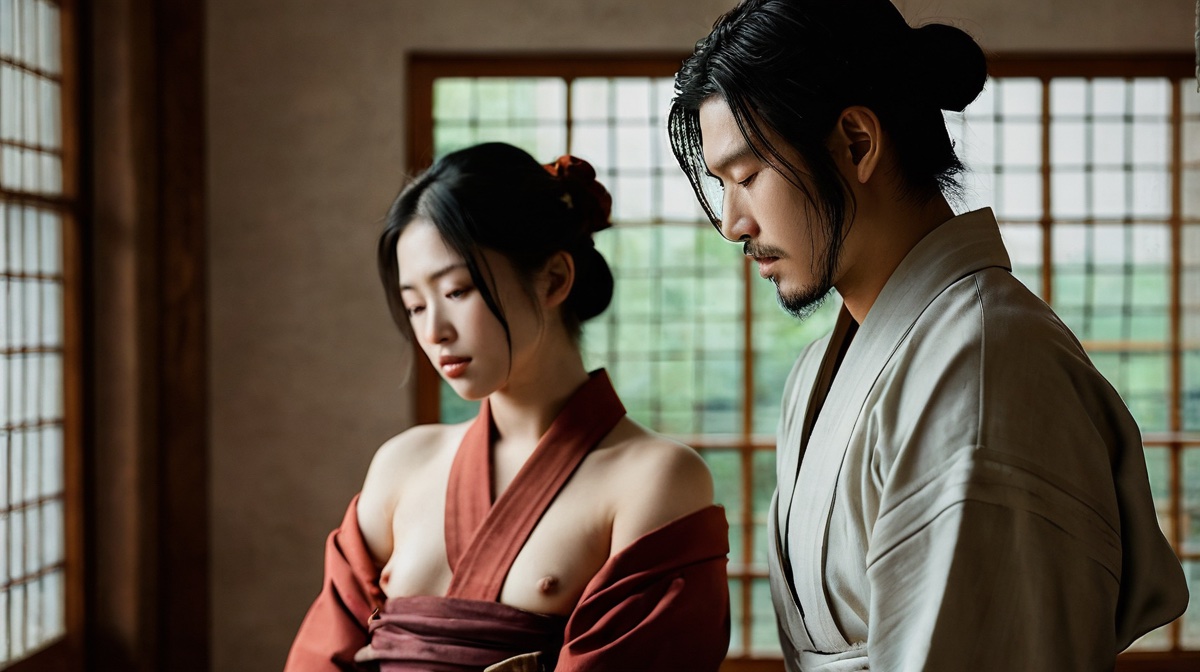
Seiu Ito, 1882 to 1961, is the figure conventionally named as the founder of modern kinbaku. He worked as a painter and as a photographer, and he is the earliest person whose surviving body of work treats rope on a body as a subject to be composed, lit and returned to across many images. He is usually described as looking to the stage torture scene for reference, which fits everything above. His pictures circulated in a period when publishing them carried legal risk.
The word founder needs handling. He did not inherit a school. He did not certify successors, and he did not codify a curriculum in the way the lineage story implies. What he did was produce a body of pictures substantial enough that everything after it can be measured against it. In art history that is usually sufficient for the title, and it requires no bloodline at all.
The magazines, then the export
After the war, Japanese curiosity and fetish magazines gave the practice its first mass readership. Kitan Club is the title most often cited. Reader photographs, serialised artwork and letters pages built a shared vocabulary and produced the first practitioners whose names meant something to strangers. This is the point at which kinbaku becomes a scene rather than an individual pursuit.
Western adoption came late, mostly in the closing decades of the twentieth century, through translated material, touring teachers and then the internet. English settled on shibari as its everyday word while kinbaku stayed closer to the erotic sense in Japanese, which is mostly an accident of which sources arrived first.
Why the tidy version fails
Three problems sink the unbroken line.
The material at the start was not doing the same thing. Restraint for policing and rope for pictures share equipment and a little geometry. They share almost nothing else.
There is a gap in the middle. Between the moment the old restraint work stopped being a job and the moment anyone photographed rope for pleasure, what carried on was theatrical and pictorial rather than technical.
And the lineage narrative was largely assembled backwards. Much of it took shape in the second half of the twentieth century, some in Japan and a great deal in the West, at precisely the moment a growing practice stood to gain from a pedigree. A tradition that can trace itself to samurai sounds serious. The neatness of the fit is itself a reason for suspicion.
None of this diminishes the subject. It changes how a picture reads. If the lineage story were true, a modern rope photograph would be a survival, and looking at one would be a form of archaeology. Since the lineage story is a construction, the photograph becomes a deliberate act of borrowing by someone who chose what to borrow, which makes the choices visible and the picture far better to argue with. What makes a rope image beautiful takes up those choices directly, and the studies on this site are worked in the manner of the traditions they name rather than pretending to descend from them.
Questions readers ask
Is modern kinbaku descended from samurai rope techniques?
Not in the direct way the popular account suggests. Hojojutsu was a real practice with real documentation, and modern rope borrows terms and shapes from it. But the surviving hojojutsu material is martial, concerned with holding a person who does not want to be held, and no continuous line of transmission runs from those documents to erotic rope. The relationship is borrowing, not descent.
Who was Seiu Ito?
Seiu Ito, who lived from 1882 to 1961, was a Japanese painter and photographer usually credited as the founding figure of modern kinbaku. He is the earliest person whose surviving output treats rope on a body as a subject to be composed, lit and returned to. Calling him a founder does not mean he inherited a school or certified successors, and this site makes no claim that he did.
What is the difference between shibari and kinbaku?
In English the two are used as near synonyms. In Japanese, shibari is an ordinary word for tying and kinbaku, tight binding, points more specifically at the erotic practice. The English preference for shibari is largely an accident of which sources were translated and repeated first.
History is a record of people who met
Every tradition on this page was carried by practitioners who found each other, argued, and worked. Reading about it is the smaller half.
Find the people