Study
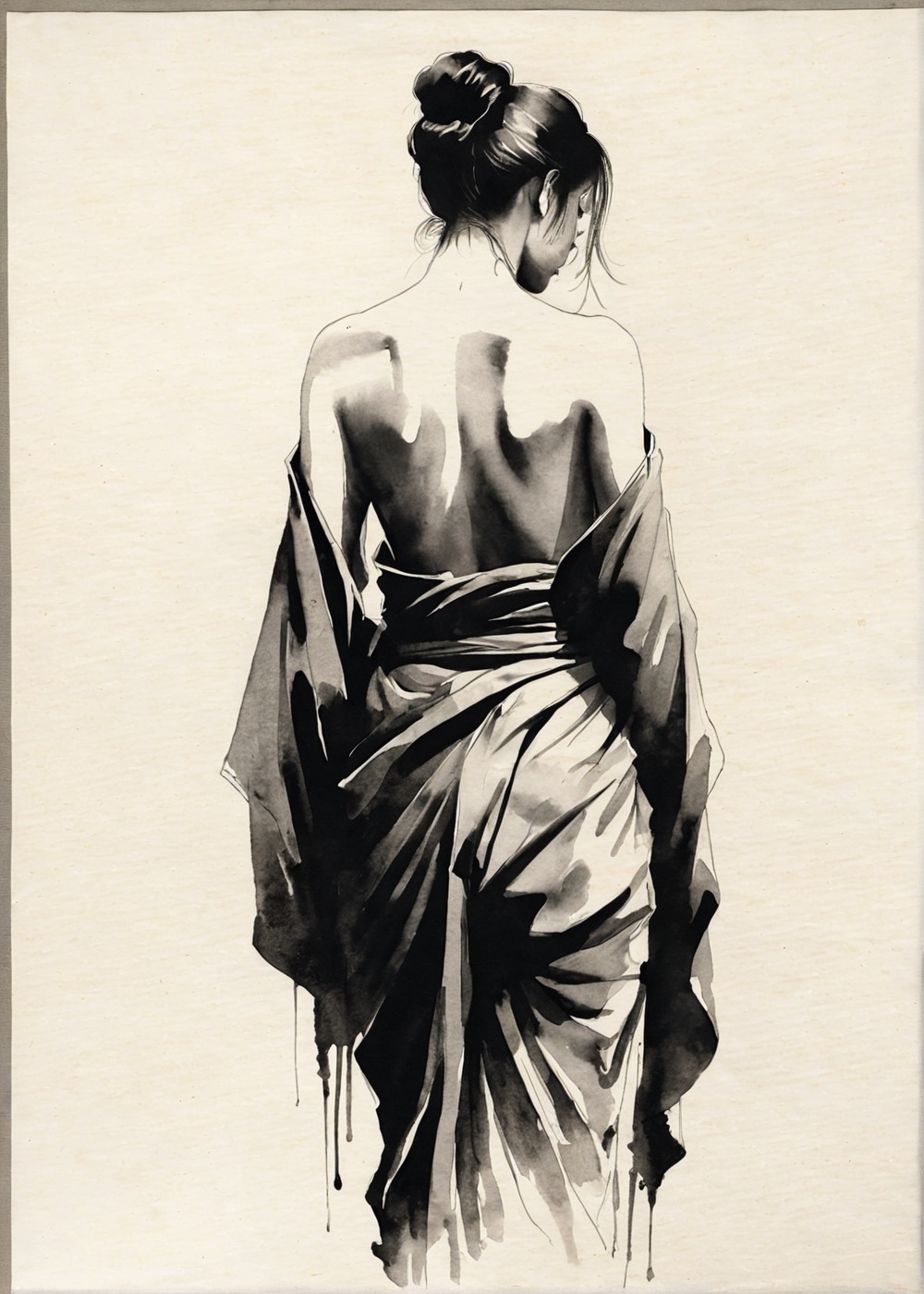
One line across the back Sumi-e brush study
One dark line crosses the shoulder blades of a draped figure and the rest of the ground is left bare.
One line across the back
Note by Tomas Berg, Rope photographer Mounted 10 September 2026
The study sets itself a limit and keeps to it: one line, one figure, and nothing else in the frame.
The figure is seen from behind, seated, wrapped from the waist down in heavy pale cloth. The back is turned, the head inclined slightly forward and to the left, and no face is available. Across the shoulder blades runs a single dark horizontal, thickening a little at the left where the brush would have started and thinning to a dry break before it reaches the right edge of the body. That break is the most deliberate thing in the picture. A continuous line would have described an object. A line that runs out of ink describes a movement.
Everything else is bare ground. The figure occupies the lower third and slightly left of centre, so the weight of the composition sits low while the empty upper region carries most of the area. Nothing indicates a floor, a wall or a light source. The absence of a cast shadow keeps the figure from settling into any particular room.
The ink manner does the rest. Edges are soft where the brush was loaded and ragged where it was dry, and the tonal range runs from black to the colour of the paper with almost nothing between. Skin is unmodelled. Only the one line is fully dark, which makes it read as the sole event in an otherwise quiet picture, exactly as a single horizontal stroke does in the brush tradition this study borrows from.
The plates on this site are original studies made for it. They are worked in the manner of a tradition rather than taken from one: they are not historical works, they reproduce no existing picture, and they are attributed to no artist. Where a study is described as after sumi-e, after a woodblock print or after a modern photograph, that names the look the image imitates, not the hand or the century that made it.
Someone held that position
Nobody held this position for the plate. In the kind of picture it imitates, somebody always did.
Find the people